





Why I Work Primarily With Men
The statistics on men’s mental health is troubling. Men are more likely to suppress emotions, men are more likely to commit suicide, men are more likely to externalize their stress through anger and substance abuse, and they are more likely to seek professional help in extreme crisis only after problems have gone too far. Yet, despite all of this, approximately 70% of therapy clients are women, and more than 70% of therapists in the field are women.
Men are overwhelmingly absent from therapy—both as clients and as providers.
This disproportionate representation of men in therapy is partly due to the format of traditional therapy. Although human beings vary in their experiences, women tend to be pretty comfortable processing their emotions through talk. On the other hand, the vast majority of men tend to process their emotions physically. This is why in traditional therapy, men tend to take longer to “find their feelings,” oftentimes choosing instead to “filter” their emotions through problem-solving or intellectualization.
For this reason, I became an ardent advocate for men’s mental health. I make sure that 80% of my clients are men, and the other 20% of my clients are married couples. I specialize in working with husbands, fathers, military veterans and men of all backgrounds who feel stuck and disconnected. As a male clinician, I understand that I am an outlier in the field, and I embrace this uniqueness. I also admire and applaud all of you men who are going against the grain in search of a male therapist.
My Approach to Therapy
My background in education and in psychotherapy lends to my unique approach to men’s psychology. During my doctorate program, I studied educational resilience and the ways in which people succeed academically, despite all types of obstacles and challenging life circumstances. After graduating, I dove into more research in the area of liminality, and specifically liminal distress. This research into resilience and liminality served as catalysts for my decision to enter the therapy field.
Liminal distress refers to that often unsettling “middle ground” between a client’s present state and that place where the client wants to be in the future. Liminal spaces can be challenging for many people, and they show up in a variety of life circumstances. For instance, divorce, graduation, losing a job, relocating to a new city, or the death of a loved one are all examples of life circumstances in which clients find themselves transitioning from one identity to another, or transitioning from one life stage to another.
As a mental health clinician, my job is to guide clients through that liminal stage. In fact, the therapy office often serves as a liminal space where the clients can safely practice transitioning from their old lives to their new lives.

The Eight Dimensions
of Wellness
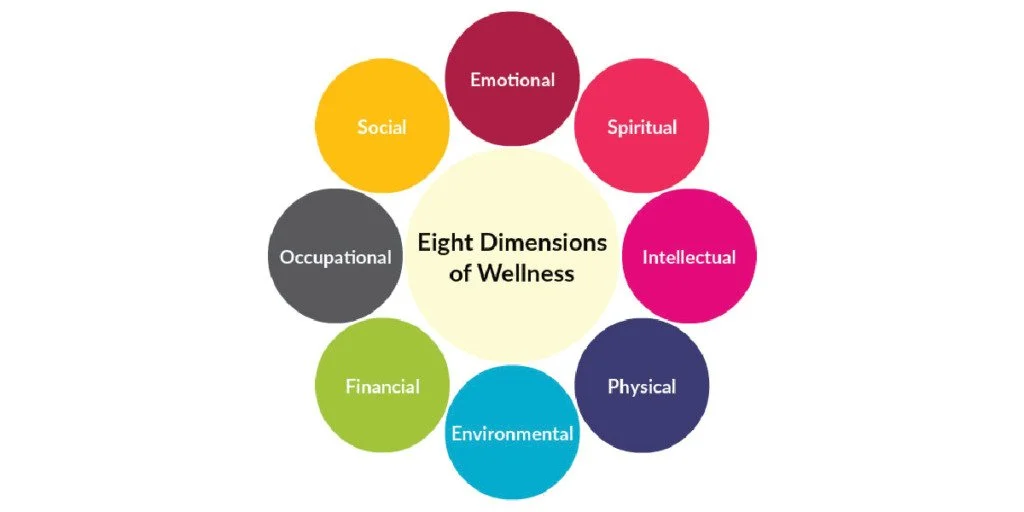
When you and I work together, we will take a more holistic view of wellness. This means assessing and monitoring your health along eight dimensions of wellness:
Physical (focusing on the NEWS: nutrition, exercise, water, sleep)
Emotional (paying attention to mood changes, anxiety, stress levels, etc.)
Intellectual (learning new things, staying curious, reading, writing, etc.)
Spiritual (connection to divine spirit, nature, beliefs, values, purpose, etc.)
Occupational (finding meaning and achievement through work, hobbies, projects)
Environmental (clean and restorative living space, home as sanctuary, etc)
Financial (budgeting, reducing debt, financial planning for the future, etc.)
Social (socializing, maintaining relationships, seeking support, etc.)
Free Consultation Call
Hit the contact button, reach out to me, and let’s have a
30-minute phone call to see if we are a good fit for each other.